“Bring Out Your Blogs” and Just Write

2019 is shaping up to be the “Year Of ‘Hey Remember Blogs’ (Navel Gazing Edition)” and I like it.

Sure, maybe it’s just me, considering that the only times I seem to make myself blog is when talking about blogging (see Writing In The Age Of Silos, on replacing Facebook with personal websites, and if blogging social media’s savior to name a few) but more people are pointing people back to blogs and saying, hey, here’s a home for you.

This week’s take comes from Marc Weidenbaum who notes that 2019 marks the 20th anniversary of the coining of the term “blog” and reflected on the state of things today:

If this year marks the 20th anniversary of the word blog, next month marks the sixth anniversary of Google killing off Google Reader, despite it having been the most-used RSS tool. Around the time I read several tweets conspiratorially tracing the decline of the internet as a safe place for self-expression to that turning point, Reynolds penned a mea culpa about the lost act of “inter-blog conviviality,” as subsequently mentioned by Warren Ellis in his excellent weekly newsletter. I thought, in turn, about why I link less to other blogs than I used to, and I recognized it’s in part because there are fewer other blogs, leading to me being reminded it’s 20 years since the birth of the word blog, if not of the act. In any case, thanks to all them for the brain nudge and habit nudge.

“Inter-blog conviviality” is a great term and really highlights what made blogging great back in the day – blogs sharing other blogs. They fed off of one another in a way traditional media didn’t at the time, and allowed the building of conversation through platforms and soapboxes that could allow ideas to spread and take shape beyond just catching headlines and memes. It helped feed great blogrolls where you could tell a lot about someone just by who they highlighted among their daily reads. It was a true social network.

Somewhere along the way blogging became something else. A pejorative. Then the “savior” of things like traditional media. As more people paid attention to blogs, blogging became serious, and a serious business. Instead of springboarding off of the mainstream media, blogs were starting to break the news. Then make the news. Then dictate the news.

Now, just about everything is blog.

One of the things that made blogging fun was that it wasn’t publishing – it was essentially journaling. It was rough. It was a quick take. It was a way to get thoughts out to a larger audience who then helped you flesh it out if you didn’t want to let it go.

Weidenbaum captures a little bit of this when he advises the reader to not worry about whether or not you can “write”:

And don’t concern yourself with whether or not you “write.” Don’t leave writing to writers. Don’t delegate your area of interest and knowledge to people with stronger rhetorical resources. You’ll find your voice as you make your way. There is, however, one thing to learn from writers that non-writers don’t always understand. Most writers don’t write to express what they think. They write to figure out what they think. Writing is a process of discovery. Blogging is an essential tool toward meditating over an extended period of time on a subject you consider to be important.

Shaun caught onto this point in a larger post worth reading:

Wiedenbaum nails it here. Previously, writing was an end. Today writing is a pleasurable end that — quite frankly — I tend to reserve for myself. Do I mind opining on current events and the things that interest me? Most certainly. Does it make me any money? Never has… at least, I don’t see myself becoming an editor at National Review or First Things anytime soon. Yet writing-as-meditation has nearly always been my style… to work out what I might think so that I can express what I actually think, or better still to express the parameters for what I might believe.

As I said above, blogging isn’t publishing. It’s a public scratchpad for folks with ideas larger than a tweet or an emoticon. It’s at its best when it’s not pretending to be the New York Times or Gizmodo or FOXNews. It’s great when it’s responding to challenges like #1000wordsofsummer where you’re just looking to get the words out and you can figure out what you meant to say later. (If I count other people’s words, this post is around 850 words, nearly there!)

I like this renaissance in blogging. And I hope it brings more people back into the fold – and some fresh blood while it’s at it.


Speaking of fresh blood: Keep an eye on Blusterhouse. Jericho Vilar and I have partnered up for a new blog that’ll be about more serious stuff than “hey, I should blog more.” If you like good writing, watch for Jericho’s stuff (dude’s a mean writer). If you like OK writing, I’ll have some stuff there, too.

I’m sure if we did wayback sleuthing we’d find lots of conference presentations in a range of professions and pursuits on how “blogging” isn’t a good use of time because of pageviews, or clicks, or SEO, or engagement, etc. Pay no attention to the man behind the podium. Just share what’s of importance to you. And don’t look at pageviews. Don’t seek claps. Don’t chase reposts. Don’t covet trackbacks. Seek the unique pleasure of having shared something you feel is worth sharing. And the conversations that sort of writing (that sort of blogging) encourages. And yes, it can take time. Good things generally do.

Mark Weidenbaum “Bring Out Your Blogs”

Tiananmen At Thirty Looks A Lot Like Tiananmen At Twenty

Change certainly doesn’t happen overnight, but one hopes it’s not another thirty, or even ten years, for China.

Yesterday marked the thirtieth anniversary of the end of the Tiananmen Square protests.

Ten years ago I wrote about the twentieth anniversary and most of what applied then applies today — though progress of the “tiny Tiananmens” and efforts of the people of China to write their own histories and forge their own futures has been limited by a state still holding control over information and lives. Change certainly doesn’t happen overnight, but one hopes it’s not another thirty, or even ten years, for China.

Below is the post from ten years ago in its entirety:

Continue reading “Tiananmen At Thirty Looks A Lot Like Tiananmen At Twenty”

That is why we have problems with Facebook and its inability to control the madness. Crank calls and robocalls were spam of the phone era. The email had its spam. Text messages also became spam. Why are we surprised that social media posts became spam — in most cases as fake news. Tomorrow it will be video and virtual reality spam.

Om Malik “Fake News Is Spam”

My cousin Helen, who is in her 90s now, was in the Warsaw ghetto during World War II. She and a bunch of the girls in the ghetto had to do sewing each day. And if you were found with a book, it was an automatic death penalty. She had gotten hold of a copy of ‘Gone With the Wind’, and she would take three or four hours out of her sleeping time each night to read. And then, during the hour or so when they were sewing the next day, she would tell them all the story. These girls were risking certain death for a story. And when she told me that story herself, it actually made what I do feel more important. Because giving people stories is not a luxury. It’s actually one of the things that you live and die for.

Neil Gaiman

From that point, I slowly began to understand that people in consumption-based societies assemble their identities via stuff, and become very emotional when those identities – and that stuff- is discarded in ways that don’t match their values. Over the years I’ve come to the conclusion that consumers actually care more about how their stuff is discarded, than how it is manufactured.

Adam Minter: In the flow of things

So, I have always seen it as a kind of parental duty to show my own children beautiful stuff, and in doing so reveal to them an alternate world. By beautiful, I mean interesting, inspiring, ambiguous, challenging and sometimes dangerous things that exist within the world of art. I feel that the online world provides us ready access to a vast and ever-deepening barrage of bad shit, where the cruel reality of the world is well covered. This continual onslaught of negativity can erode our souls and the souls of our children. My job is to show my children that there is a whole universe that exists beyond the grim issues of the day. This is not to divert them from certain truths, but rather to remind them that the parallel world of art and the imagination can literally save their lives, as it certainly saved mine.

Nick Cave via Austin Kleon

Waiting is a trap. There will always be reasons to wait – The truth is, there are only two things in life, reasons and results, and reasons simply don’t count.

Robert Anthony

Ethics and Hats

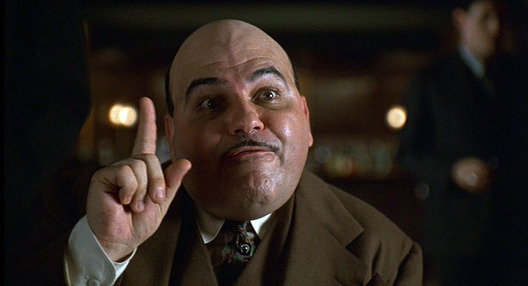
It’s gettin’ so a businessman can’t expect no return from a fixed fight. Now if you can’t trust a fix, what can you trust? For a good return you gotta go bettin’ on chance, and then you’re back with anarchy. Right back inna jungle. On account of the breakdown of ethics. That’s why ethics is important. It’s the grease makes us get along, what separates us from the animals, beasts a burden, beasts a prey. Ethics.

Johnny Capser, “Miller’s Crossing”

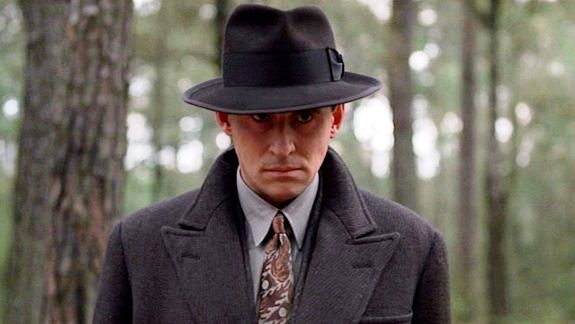
It’s significant that Verna takes Tom’s hat off as she kisses him, and later in the film, in a pivotal moment, Leo hands Tom his hat.  The hat in the gangster film has always been an important prop, but here, we realize that, to these gangsters, the hat is part of the persona.  In this film, characters are constantly putting their hats on and off, and there seems to be an unusually high concern for the welfare of hats (“See you got your hat back.”)  Tom’s hat seems to be part of his identity, and you could even say that the hat helps him play a role.  The other character whose identity seems to be tied to their hat would be the sinister Dane.  Where as Tom’s hat almost acts as a mask or a shield (maybe both?), The Dane’s hat seems to accentuate his diabolical nature.  They are the horns of this devil.

Top Shelf Movies – Men Of Principle: Ethics and Hats in Miller’s Crossing