That is why we have problems with Facebook and its inability to control the madness. Crank calls and robocalls were spam of the phone era. The email had its spam. Text messages also became spam. Why are we surprised that social media posts became spam — in most cases as fake news. Tomorrow it will be video and virtual reality spam.
Om Malik “Fake News Is Spam”
Category: Quotes
My cousin Helen, who is in her 90s now, was in the Warsaw ghetto during World War II. She and a bunch of the girls in the ghetto had to do sewing each day. And if you were found with a book, it was an automatic death penalty. She had gotten hold of a copy of ‘Gone With the Wind’, and she would take three or four hours out of her sleeping time each night to read. And then, during the hour or so when they were sewing the next day, she would tell them all the story. These girls were risking certain death for a story. And when she told me that story herself, it actually made what I do feel more important. Because giving people stories is not a luxury. It’s actually one of the things that you live and die for.
Neil Gaiman
From that point, I slowly began to understand that people in consumption-based societies assemble their identities via stuff, and become very emotional when those identities – and that stuff- is discarded in ways that don’t match their values. Over the years I’ve come to the conclusion that consumers actually care more about how their stuff is discarded, than how it is manufactured.
Adam Minter: In the flow of things
So, I have always seen it as a kind of parental duty to show my own children beautiful stuff, and in doing so reveal to them an alternate world. By beautiful, I mean interesting, inspiring, ambiguous, challenging and sometimes dangerous things that exist within the world of art. I feel that the online world provides us ready access to a vast and ever-deepening barrage of bad shit, where the cruel reality of the world is well covered. This continual onslaught of negativity can erode our souls and the souls of our children. My job is to show my children that there is a whole universe that exists beyond the grim issues of the day. This is not to divert them from certain truths, but rather to remind them that the parallel world of art and the imagination can literally save their lives, as it certainly saved mine.
Nick Cave via Austin Kleon
Waiting is a trap. There will always be reasons to wait – The truth is, there are only two things in life, reasons and results, and reasons simply don’t count.
Robert Anthony
Ethics and Hats
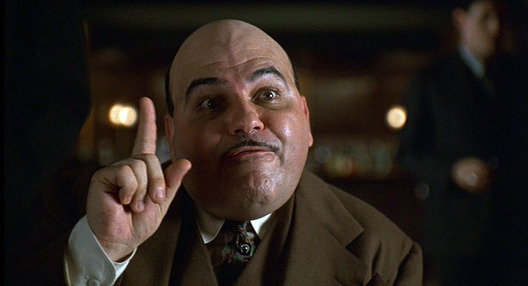
It’s gettin’ so a businessman can’t expect no return from a fixed fight. Now if you can’t trust a fix, what can you trust? For a good return you gotta go bettin’ on chance, and then you’re back with anarchy. Right back inna jungle. On account of the breakdown of ethics. That’s why ethics is important. It’s the grease makes us get along, what separates us from the animals, beasts a burden, beasts a prey. Ethics.
Johnny Capser, “Miller’s Crossing”
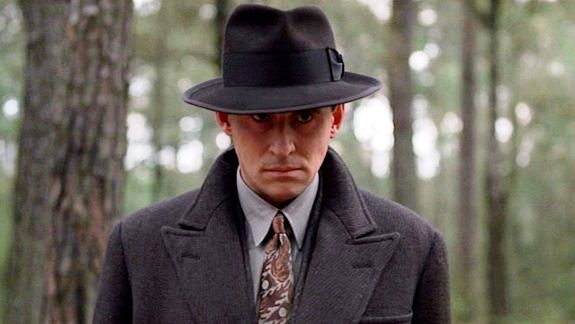
It’s significant that Verna takes Tom’s hat off as she kisses him, and later in the film, in a pivotal moment, Leo hands Tom his hat. The hat in the gangster film has always been an important prop, but here, we realize that, to these gangsters, the hat is part of the persona. In this film, characters are constantly putting their hats on and off, and there seems to be an unusually high concern for the welfare of hats (“See you got your hat back.”) Tom’s hat seems to be part of his identity, and you could even say that the hat helps him play a role. The other character whose identity seems to be tied to their hat would be the sinister Dane. Where as Tom’s hat almost acts as a mask or a shield (maybe both?), The Dane’s hat seems to accentuate his diabolical nature. They are the horns of this devil.
Top Shelf Movies – Men Of Principle: Ethics and Hats in Miller’s Crossing
On “Media Education and Change”
Service over product. So long as we continue to teach media as the creation of a product that can be bought, sold, and controlled, our students will miss the greater opportunity to be of service to a public. It is in service that we will build value.
Jeff Jarvis on “Media Education And Change”
I think originality is a word of praise for things that have been expressed in a marvelous way and that make points of origin for any particular element beside the point. When you read Saul Bellow or listen to Bob Dylan sing, you can have someone point to various cribbings and it won’t matter, because something has been arrived at which subsumes and incorporates and transcends these matters. In that way, sourcing and originality are two sides of the same coin, they’re a nested partnership.
I don’t think originality has any value as a description of process. In that regard it’s as meaningless a process word as beauty is. No artist says, “Let me sit down and do some beauty now.”
Jonathan Lethem
But something about love? No way. All the big love stories have already been used, and the lesser ones have no literary use.
What did I tell those kids who wrote and asked how one becomes an author? It was something like write about what you’ve lived, about what you know …But I’ve done that. I’ve squeezed my middle age dry, and when I got seriously old, I did what I could with that, too, but then I tried to write about really young people, and that didn’t work out so well. And the kids wrote again and asked, And what do we do now, and I said write about your fears, and they did it, at once, and wanted feedback as soon as possible.
And what do I fear above all? To be a sore loser, to be second best. But this is not something one writes about.
Tove Jansson on Writer’s Block
Books are frozen voices, in the same way that musical scores are frozen music. The score is a way of transmitting the music to someone who can play it, releasing it into the air where it can once more be heard. And the black alphabet marks on the page represent words that were once spoken, if only in the writer’s head. They lie there inert until a reader comes along and transforms the letters into living sounds. The reader is the musician of the book: each reader may read the same text, just as each violinist plays the same piece, but each interpretation is different.
Margaret Atwood