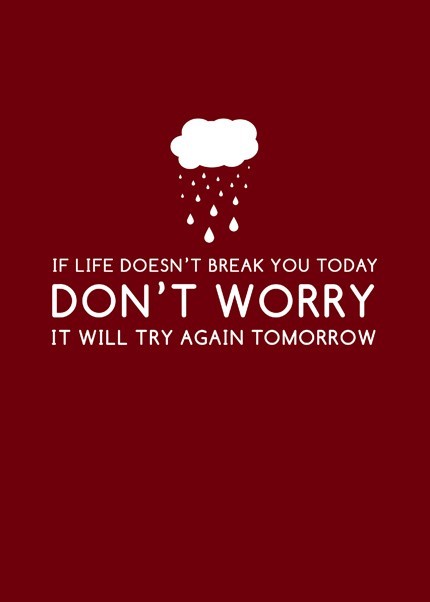
If life doesn’t break you today, don’t worry, it will try agin tomorrow
(via papertissue)
Life and times of Jason since 2001
William Faulkner, speaking of Ernest Hemingway: “He has never been known to use a word that might send a reader to the dictionary.”
Hemingway’s response: “Poor Faulkner. Does he really think big emotions come from big words?”
The Future of Social Media and Politics
While social media has yet to win any elections, it is having a greater impact on how elected officials communicate. To date, most have tried to make the medium fit their message as opposed to make the message fit the medium. But as social media evolves and staff and officials are more hands on that may change.
“Democrats Sweep Country” One Hundred Years Ago
1910 was a big year for the other party. Democrats gained 57 seats in the House and 10 in the Senate.

Nanowhonow? Nanowrimo “Dos” and “Don’ts”
It’s that time of year again where thousands around the world challenge themselves to write a 50,000 word “novel” in 30 days. I’ve tried this a couple times, completed it once. Probably not going to be able to give it a go this year, but good luck to those that put forth the effort.
Any word you have to hunt for in a thesaurus is the wrong word. There are no exceptions to this rule.
Stephen King
I have just emailed my first query to an agent. Now to wait. And fire off a few more.
“The Things Between You And Her” – preparing an unsolicited submission this week…
Herman Melville cf. [T]rap streets, or deliberate cartographic errors introduced into a map so as to catch acts of copyright infringement by rival firms. In other words, if a competitor’s map includes your “trap street” — a geographic feature that you’ve simply invented — then you (and your lawyers) will know they nicked your data, gave it a quick redesign and tried to pass it off as their own. But this strategy of willful cartographic deception is not always limited to streets: there can be trap parks, trap ponds, trap buildings. And trap rooms. …. These and other subtle geographies — trap architectures — awaiting detection all around us.
—Geoff Manaugh (via bobulate)
Only took a conversation with Jac, but now the book has a name. Formatting and drafting a query for an unsolicited submission to go out next week. Aiming to query to agents by the end of November. Gonna make this happen.
I don’t really write about anything I don’t love even if that love sometimes gets all screwed up and tormented.
Jonathan Lethem