The Morality Of Blogging About Our Children (Or: Don’t Be A Jerk To Your Kids)

For many, blogging is essentially a personal journal – public diary that strangers can stumble across but that’s OK because if we didn’t want strangers to stumble across it we wouldn’t have put it out there. There are of course varying degrees to this personal journaling with some people more or less putting it all out there, ugly warts and all, and often including the assorted characters in their lives in the stories, often without real names being changed to protect the innocent.

As social media and the assorted platforms have grown and evolved, there has been an on going debate on how much is too much when it comes to “sharenting,” especially as folks have turned the life and times of their children into incomes. It’s only over the last few years that the subjects of many of these stories are coming of age and finding out just how much of their private lives weren’t so private.

Christie Tate, lawyer, writer, mother of two children, came face to face with this this past Christmas when her fourth-grade daughter received a new laptop and did what people do: searched the names of those she loved.

“What’s all this?” she said. The screen was covered with thumbnail sketches of her as a baby, a toddler and preschooler — each paired with an essay or blog post I’d written on the subject of parenting. “Why are all of these pictures of me on the Internet?” She wanted to know, and she had a right to know

I’ve tried to be respectful of my children’s lives on social media. My personal accounts where most of their photos are shared are private. The stories I share are moments of joy and curiosity, the highlights of our moments together. I’m not about to pull back the curtain on the nitty gritty details of their lives because, quite frankly, it’s either no one’s business but my family’s or it’s not my story to tell.

That said, if one of my children came to me in the future and said they had a problem with what I had shared, my immediate response would be an apology, a hard stop, and to work with them on how we remove it and turn it into a life lesson for both of us on the permanence of the web and responsible usage. Because as a parent that’s my job.

So this bothers me:

Promising not to write about her anymore would mean shutting down a vital part of myself, which isn’t necessarily good for me or her. So my plan is to chart a middle course, where together we negotiate the boundaries of the stories I write and the images I include. This will entail hard conversations and compromises. But I prefer the hard work of charting the middle course to giving up altogether — an impulse that comes, in part, from the cultural pressure for mothers to be endlessly self-sacrificing on behalf of their children. As a mother, I’m not supposed to do anything that upsets my children or that makes them uncomfortable, certainly not for something as culturally devalued as my own creative labor.

…

My daughter didn’t ask to have a writer for a mother, but that’s who I am. Amputating parts of my experience feels as abusive to our relationship as writing about her without any consideration for her feelings and privacy.

Words. I have none.

OK, I do have some (clearly, I’m writing a whole post here, afterall) but I think Waldo Jaquith nailed it in his tweet here:

This woman is teaching her daughter to only share things with her mother that she’d want published for the whole world to read. She has permanently poisoned her relationship with her child.

And then she went and wrote about *that* in the Post, too.

Are there cultural pressures for a mother (and father, to be honest) to self-sacrifice on behalf of their children? Yes, it’s called being a parent. That doesn’t devalue anyone’s creative labors, in fact, it provides different opportunities to be creative. It’s a challenge to be embraced, not pushed aside because it’s difficult or requires a sacrifice.

The Word Of The Day Is “Sharenting”

Links on links on links.

1) “My daughter didn’t ask to have a writer for a mother, but that’s who I am.”

Promising not to write about her anymore would mean shutting down a vital part of myself, which isn’t necessarily good for me or her. So my plan is to chart a middle course, where together we negotiate the boundaries of the stories I write and the images I include. This will entail hard conversations and compromises. But I prefer the hard work of charting the middle course to giving up altogether — an impulse that comes, in part, from the cultural pressure for mothers to be endlessly self-sacrificing on behalf of their children. As a mother, I’m not supposed to do anything that upsets my children or that makes them uncomfortable, certainly not for something as culturally devalued as my own creative labor.

*bites tongue*

I’d written nearly 700 words on this before I reminded myself of one of my New Year resolutions of worrying less about stuff I can’t change and more focusing on the things I can. I also don’t think there’s anything I can add to this conversation that the internet hasn’t already.

2) The term “sharenting” is new to me and it’s perfect.

Are generations of children now growing up without privacy? “I don’t think so,” she says. “The conditions of their privacy are changing, partly because of their own actions, partly others’. What will matter to children is to feel they have agency, respect and dignity – that’s at the heart of privacy. So anyone sharing or using their images should prioritise this.”

I try to be careful about how I share the lives of my family online. Nothing too personal or embarrassing, certainly not the warts. I hope I’m doing a good job of it.

3) “Jerry was thinking about none of this at his kitchen table. He was thinking about how he would hide his lottery playing from Marge.”

Marge would have questions, Jerry knew, and he might not have bulletproof answers. He didn’t quite believe the numbers himself. How likely was it that the hundreds of employees at the state lottery had overlooked a math loophole obvious enough that Jerry could find it within minutes? Could it be that easy? He decided to test his theory in secret, simulating the game with a pencil and yellow pad first. He picked numbers during a roll-down week, waited for the drawing, and counted his theoretical winnings. On paper, he made money.

Fascinating longread about how a couple in Michigan hacked the lottery.

J’s Top Ten Albums Of 2008

About a month ago I thought this list would be easy. Heck, it might only have been five albums. My musical experience in 2008 was pretty limited for the most part. It wasn’t that I didn’t find new music, it’s just that so much of it came out before 2008. But then I went scouring and started finding stuff I had no clue was out there and hearing songs I’d heard all year and finding the albums that went with them and, hey, they weren’t bad at all. But, since so many hit me so late, it was hard to figure out just where in the top ten they would go. The top three was pretty set early on, but the back seven really could fall in any order. Every one of these albums are pretty damn good and would make an excellent addition to your collection. So, without further ado:
10. The Stand Ins – Okkervil River (Jagjaguwar)

With a varied sound Okkervil River almost sounds like they’re in search of a theme. But the album holds up, from the fun opening with “Lost Coastlines” to the beautiflly put together but fun named “Bruce Wayne Campbell Interviewed On The Roof Of The Chelsea Hotel, 1979”.
9. With Blasphemy So Heartfelt – Jessica Lee Mayfield (Thirdy Tigers)

Light country based fare, Jessica Lee Mayfield’s voice holds you on this one. Some sad numbers make this another album that might not bring sunshine into your life. What can I say, I like the dreary stuff sometimes.
8. Mudcrutch – Mudcrutch (Warner Bros.)

Mudcrutch was formed in 1970 and spent about four years grinding through Gainsville, Florida before being signed to Shelter Records and releasing one single before breaking up in 1975. That might have been the end of it since the band members moved on to other projects, the most popular being the one formed by Mudcrutch’s front, guitarist and keyboardist: Tom Petty and the Heartbrakers. Maybe you’ve heard of them. Over thirty years later Mudcrutch has gotten back together and finally released a full length album, some parts old, some parts new, all parts pretty good. A must for Petty fans and anyone that likes good stuff.
7. Only The Night – Kings Of Leon (RCA)

Hey, now we’re getting more upbeat! A lot of folks say the fouth album form this lo-fi group is a bit too produced and polished, but personally I like the sound. They clean up nicely with a good southern rock sound.
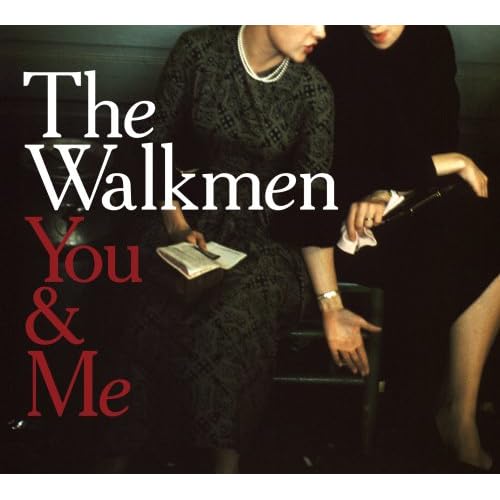
6. You & Me – The Walkmen (Gigantic)

There’s something about distant vocals sounding genuinely sad as they work through an album.
5. Vampire Weekend – Vampire Weekend (Xl Recordings)

A liberal use of Afrobeat kinda gives these guys a bit of an early 80s Paul Simon sound but they use it well, creating a fun, upbeat album unlike anything else you’ll come across this year.
4. Fleet Foxes – Fleet Foxes (Sub Pop)

Last year Sub Pop had four albums in the top ten. This year they pull only one, but not for lack of trying. I can only blame myself.
I came to Fleet Foxes thanks to hearing their single “Your Protector” on KEXP. But even if I hadn’t I probably would have found them based on other purchases made by folks who bought half the albums on this list. I’m unique and original like everyone else. That said, we mellow out again this this first offering from Fleet Foxes. A light folksy sound that even got Pitchfork to give it 9 out of 10.
3. Hold On Now, Youngster – Los Campesinos (Arts & Crafts)

I don’t think I’ve heard an album this fun in a long time. There’s a lot of noise, there’s a lot of shouting, there’s a lot of good music.
2. Heart On – Eagles Of Death Metal (Downtown)

Starts rockin’, ends rockin’, but they are neither eagles nor death metal. I’m not a big fan of Josh Homme’s work with Queens of the Stone Age but I dig his two man group work with Eagles Of Death Metal.
1. Attack & Release – Black Keys (Nonesuch)

Ike Turner would have had one hell of a come back if he’d lived long enough. Instead, the Black Keys had to take the album they wrote for him and make it themselves, teaming up with Danger Mouse to churn out what is the best album to come out in 2008. Danger Mouse’s work here is less influental on the sound than it was in Beck’s “Modern Guilt”, instead merely polishing up and helping flesh out the Black Keys while still allowing them to keep a blusey, rockin’ sound.

Some Of The Best Best Of Lists Of 2018

Lists on Lists on Lists

The 20 Best Movie Posters of 2018

National Geographic’s Best Photos of 2018

An abandoned home in the village of San Miguel Los Lotes, near the Guatemalan city of Escuintla, after a June volcanic eruption. (Daniele Volpe – TIME)

TIME Magazine’s Top 100 Photos of 2018

Barack Obama’s Favorite Books/Movies/Songs of 2018

Longreads Best of 2018

The Species That Went Extinct In 2018

52 Things Kent Hendricks Learned in 2018

5. You ascend spiral stairs in a clockwise direction. This design dates back to medieval times. It’s a defense against attackers. A right-handed attacker would be holding their sword in their right hand, making him less mobile and agile than the defender facing down the stairs. (Wikipedia)

Reuters Pictures of the year 2018

Pitchfork’s 50 Best Albums of 2018

52 Things Tom Whitwell Learned in 2018

15. No known machine learning system can reliably tell a bird from a bicycle when a human is trying to trick the system. [Tom B Brown]

On Fatherhood

I’m sure it’s not a unique opinion among fathers, but being a dad is my life’s work. It’s what I’ve wanted for almost my entire life. And here it is nearly four and a half years along and it’s still an incredible, fascinating, ever evolving thing that never fails to surprise.

A little late with the 2018 introspection considering it’s already day two of 2019 but I’m killing time late at night (or early in the morning) while kiddo #2 is passed out on my shoulder. Which is one of the best moments to have, warm lump content with the world snuggled in and all. This time next year we probably won’t have these moments anymore, certainly not as often.

At a certain point there will be a moment when he’ll do this for the last time but I won’t know it. Sad.

2018 was a good year. It had plenty of moments – new addition of the cat Otis, promotion at work, new opportunities for my wife, fun vacations to the beach and Amsterdam – but it was another year of watching the boys get older, of seeing Sammy be an incredible big brother to Jasper who really wants to do any and everything Sammy does not because he feels it’s his right but because he looks up to Sammy and it’s adorable.

It was another year of fatherhood and reflecting on how it’s changing me each and every day and on how I need to change even more to keep up with it.

I’m sure it’s not a unique opinion among fathers, but being a dad is my life’s work. It’s what I’ve wanted for almost my entire life. And here it is nearly four and a half years along and it’s still an incredible, fascinating, ever evolving thing that never fails to surprise.

My challenge to myself for 2019 is not just to spend more time with the kids, but to waste more time with the kids.

Michael Ricci reflected on how sometimes a busy day can be a wasted day:

What happened? Part of it, I trace back to an obsession with spending time with him. With work and all, sometimes I’m so desperate to make it quality time that little of it ends up being so. Even if we have a day where everything gets checked off the list, it’s usually just a blur. In the car, out of the car. ‘Hold my hand.’ ‘Can’t you have more than two fries?’ ‘No, that’s not our toy.’ ‘I don’t know where Mommy put the wipes!’ Dads worry about this. Pew found that most dads — 63 percent — feel that they spend too little time with their kids. That’s a lot. That’s way too many.

Ricci points to the words of Pope Francis who asked fathers “if they had the courage of love to waste their time with their children.” The pope spoke of children as “orphans” because fathers aren’t there to guide them:

“They are orphans in a family because their fathers are often absent, also physically, from home, but above all because when they are home they don’t act like fathers, they don’t dialogue with their children, they don’t fulfill their role as educators, they don’t give their children, by way of their example and their words, those principles, values and rules of life that they need like bread.”

There is great value in playing with your kids. It’s something that’s easy to forget. Just as playtime at school or daycare is where children often learn what it means to share, communicate, the difference of each child, form bonds of friendship and trust, so it is especially true at home where a child looks to their parents as examples of how to be proper people in the world.

Because just as Jasper mimics Sammy because he looks up to his big brother, both (and especially Sammy) look to me for guidance because they’re learning what it means to be young men in this world from the example they have before them. No pressure or anything.

The other challenge in wasting time with them is to let the reverse happen as well – there is so much for me to learn from them. Not just about being a father, but about being a kid and exploring so much of the world for the first time. About patience. About slowing down because their legs are shorter, because the details are important, or because sometimes they have to ask a third time just to be sure.

Being a dad is at once hard and easy. And daunting and scary and fun. It helps that I have an incredible partner along for the ride and two amazing kids who are helping steer.

It’s my life’s work and it’ll never be finished. And I look forward to using 2019 and every year after to explore what’s in store for all of us.

1993 Was The Greatest Year In Music But I’m Just Going To Write About Nirvana

For my tastes at the time it was the alternative rock and grunge music that stood out. Not that I was angsty. Not really. Just in the “I’m such a moody 14 year old” kinda way that makes adults roll their eyes.

Teenage angst has paid off well
Now I’m bored and old

“Serve the Servants” – Nirvana (In Utero)

I’ve been on a nostalgia kick lately and I’ve dragged my kids along thanks to a curated Nirvana station on Pandora. My oldest, Sammy, routinely requests “Peaches” by Presidents of the United States of America, though it’s usually because he wants to fight like the ninjas at the end of the music video. But that was 1995.

NPR has a series of articles they run every few months asking “XX Years Later: Was YEAR The Greatest Year In Music?” Last month it was 1993’s turn, and the answer is: Yes, 1993 was the greatest year in music.

Was 1993 the greatest year in music? Ask that question to someone who was in high school or college that year, and the answer might be yes. To those of you now in your late 30s and early 40s, grunge is your classic rock, and Snoop Dogg’s Doggstyle and Wu-Tang Clan’s Enter The Wu-Tang (36 Chambers), are your go-to hip-hop classics. That year also saw the release of some watershed debuts including Exile In Guyville by Liz Phair, Tuesday Night Music Club by Sheryl Crow, August and Everything After by Counting Crows, Bikini Kill’s Pussy Whipped, Radiohead’s Pablo Honey, and Reachin’ (A New Refutation of Time and Space) from Digable Planets. Alt-rock was still hanging on as the flavor of the moment with The Breeders’ Last Splash, In Utero by Nirvana, Siamese Dream by Smashing Pumpkins, Pearl Jam’s Vs., and U2’s Zooropa.

For my tastes at the time it was the alternative rock and grunge music that stood out. Not that I was angsty. Not really. Just in the “I’m such a moody 14 year old” kinda way that makes adults roll their eyes.

The Fall of 1993 was peak grunge with the release of Nirvana’s “In Utero” and Pearl Jam’s “Vs.” within weeks of each other and the chart just chock full Seattle based and derivative acts. Washington Post has a fascinating oral history of the time, including the probably overblown “rivalry” between Nirvana and Pearl Jam:

Thayil: There’s definitely different ways that a band like Pearl Jam managed their success compared to how Nirvana did. What came out of that was our understanding of how well Pearl Jam managed their situation, to keep it within the bounds of where they would like to be in their career, to not let things get ahead of them, or let the situation become unmanageable.

Steve Turner (guitarist, Mudhoney): [Nirvana was] already kind of struggling when we toured with them. There didn’t seem to be anybody in charge. It didn’t seem like there was a lot of communication between management, band and the important people involved. It just seemed like it was kind of happening, regardless of what the guys wanted.

When we went on tour with Pearl Jam, it was kind of night and day. Pearl Jam was really organized and really friendly and fun, and they were really stoked with what was going on, and they surrounded themselves with good people. It made me look at the Nirvana thing even more like, “Man, it’s a shame they can’t get their [act] together like Pearl Jam.”

Billig Rich: Everybody thought they were like, against each other, and there was negativity, and that’s so not the case at all. They were all cut from the same cloth.

Novoselic: I don’t know if there was a rivalry. We just kind of did our own things.

And in this moment of Peak Grunge, Nirvana would record for MTV Unplugged in November, 1993, perhaps the pinnacle of the Unplugged series and one of the best performances out of the ’90s:

Cobain subtly subverted the format, which usually featured acts playing stripped-down versions of their hits, by filling the set list with cover songs. He also invited two of his musical heroes, Cris and Curt Kirkwood of the little-known Meat Puppets. The lead singer even helped design the set, asking for it to be decorated with stargazer lilies and black candles.

The room’s haunting vibe later led the event to be described as sorrowful, but despite Cobain’s well-documented struggles at the time, the evening was far from dour. As the show progressed, those in attendance began to realize that what they were watching would become legendary.

“You knew for sure that history was being made,” said former MTV executive Amy Finnerty, who worked closely with Nirvana. “No doubt about it. You’re lucky if you get to be at something like that once in your lifetime.”

The whole The Ringer piece is worth a read: how the show came together, the anxiousness, and the moments where Kurt Cobain opened up in ways not typically seen in his performances, the emotion throughout, especially in the close with their cover of “Where Did You Sleep Last Night?” by Lead Belly.

In the words of Amy Finnerty, a former MTV Executive, on the pause in the end: “The breath in between the breath. He made time stop. Time just stopped.”

Novoselic: 1991 to 1994, for me personally, what was that, three years, but it seems like a 10-year span, because there was so much going on, and then it ended in a disaster. I think of 1993, and I was in this bubble.

Washington Post

Six months after recording Unplugged Kurt Cobain would commit suicide at the age of 27.


One last Nirvana related read, Thomas Beller chronicled his 2 year old’s introduction to Nirvana in The New Yorker and how he got his kid through what can be some scary music:

Nirvana’s music, in its anguish and energy, is scary. “Nevermind” is scary. But the break in “Drain You” is especially scary. I either had to turn it off or find a way to make this work. I didn’t want to turn it off. Instead, I turned it down an infinitesimal amount and addressed my son’s concerns.

“Alexander,” I said, bending over to talk near his face. “This is the part where they are in the swamp. The water is dark and murky, and the trees are low. They’re walking through the wet mud in the dark underbrush of the swamp.”

He looked at me with wide eyes. The colored lights added to the discotheque-meets-haunted-house mood. I worried that he would have nightmares, and that I would rue the night I played “Drain You.” People would shake their heads and say, “What were you thinking?”

My four-year-old Sammy loves music. Whether dancing, banging on instruments, or just listening in the car, this kiddo will sit and focus and imitate and ask questions about new words or sayings or even the emotions of the singer, a level of depth that continues to fascinate me.

When he first heard “Serve the Servants,” the opener on In Utero, he started with the close listen and about half way through started with the questions:

Sammy: “Who is that?”‬

‪Nirvana, buddy. That’s Kurt Cobain singing.‬

‪Sammy: “He doesn’t sound angry, he sounds sad.”‬

‪You have no idea, kiddo.‬

“We Should Replace Facebook With Personal Websites” — Yes. Yes we should.

2018 has not been a kind year to Facebook. Most of their problems are self inflicted, of course, but how folks are responding in the wake of story after story after story is interesting. Especially as people have started to think more and more about how to get out of the Facebook silo and back to using personal sites to share our stories:

There’s a subtext of the #deleteFacebook movement that has nothing to do with the company’s mishandling of personal data. It’s the idea that people who use Facebook are stupid, or shouldn’t have ever shared so much of their lives. But for people who came of age in the early 2000s, sharing our lives online is second nature, and largely came without consequences. There was no indication that something we’d been conditioned to do would be quickly weaponized against us.

Facebook has of course become something much larger than a single website, and has, despite its flaws, “helped connect the world” for better or worse. But Facebook tapped into a trend that was already happening—it didn’t invent the idea of letting people put stuff about their lives online, it just monetized it better.

When I think about my own Facebook use, I think often about that first website I made, and how that site served the exact same purpose then that Facebook does now. My original sin wasn’t making a Facebook account, it was abandoning my own website that I controlled (the original site was hosted on Tripod, but if I had to do it all over again, I’d pay for web hosting.) All these years later, maybe it’s time to update Jason’s Site.

I’ll be the first to admit that my blogging and overall writing was absolutely wrecked by social media. Have some random thoughts? Let’s see if I can fit it into a Tweet. Find a link? Up on Facebook it goes. I don’t even have to add any of my own thoughts for context. And all from the comfort of my own phone (which is hard to craft a blog post from, let me tell you).

But as much as we can challenge ourselves to rebuild the world of blogs and personal websites, the problem isn’t so much in how we create content online but in how we consume it. Facebook does a real good job of feeding people information quickly and easily, all tailored to fit their data driven desires. Sure, we can embrace personal websites again, but this ain’t no Field of Dreams, just because we build it doesn’t mean anyone will come.

I touched on this a bit back in June when writing about how Facebook is a terrible gatekeeper. Breaking free of Facebook’s hold on data is up to the user and requires work:

It requires manual typing and visiting sites that look different from one another or update at random times throughout the week. Or using an RSS reader like Feedly. Yeah, you’re probably still going to stick with what you know and like, but you’ll at least challenge yourself to go beyond a format that rewards sensationalism and outrage to reach the lowest common denominator in as few words as possible.

Or maybe simply changing the way we utilize Facebook to serve up third party content will make a difference. Even then you’re up against the algorithm which wants to keep people on Facebook and seeing their advertisements.

There are no easy answers. But as users are faced with more and more reasons to worry about Facebook’s ability to keep our data secure, many are going to be looking for other ways to get the same fix. Maybe there’s the next big thing around the corner. Maybe Facebook figures it out. Or maybe folks just start looking for new stuff on their own.

Until then, I should probably keep up with this site a little more often. Just in case they do come.

“Take Care Of Your Little Notebook”

I’ve started keeping a pocket notebook. It’s not much – a point or a few about the day, usually about the boys or something I read.

I’ve started keeping a pocket notebook. It’s not much – a point or a few about the day, usually about the boys or something I read. Today included a Hemingway quote (or “Hemmingway” as I wrote. Ah well.).

I’m hoping the notebook will help me in a few ways:

  • Reflecting on the day and remembering the good things without having to Tweet or Facebook them
  • Getting back into the habit of writing more often
  • Providing myself a journal during my children’s formative years

I’ve always enjoyed notebooks. I have piles of them with a few pages written in here and there – parts of stories, meeting notes, grocery lists, contact information, dimensions of something. I’ve never been good about keeping up with any one notebook, either falling out of any habit in use or moving on to another shiny new book or for whatever reason.

I’ve been reading Austin Kleon’s blog again lately. It’s an old favorite that always inspires me but then I dismiss my own abilities when it comes to art or penmanship. But also a feeling that I don’t have a lot to say. Which isn’t true. More than a decade of social media use, seventeen (more or less) years of blogging, daily conversations with my wife and children, those are all thoughts and sayings and sharing that have moments worth chronicling in a way a bit more permanent and accessible than digitally.

Charles Simic wrote in The New York Review in 2011 to “Take Care Of Your Little Notebook“:

Inevitably, anyone, including its owner, perusing through one of these notebooks years or even months later, is going to be puzzled or embarrassed by many of the entries, surprised by others he has forgotten (like a glorious meal in a restaurant for which he took the trouble to itemize the dishes and their ingredients), and impressed by an occasional striking passage, which, lacking the quotation marks, he is not sure whether to attribute to himself or to someone far cleverer, funnier and more articulate, whom he happened to be reading at the time.

Same of course is true of a blog or social media postings, but paper just FEELS more lasting.

It’s also something that gets the eyes off the screen (I say as I thumb this out on my phone at 12:10 am – coffee after dinner was a bad idea). It helps commit things to memory a little bit better. And it’s a practice that I hope my boys will pick up because I want to encourage their imagination and reflecting on the world and their day. Which is all the more reason for me to strive harder to be consistent with it.

Here’s an ad are you lonely?

Random links for random times.

1. “I don’t recall exactly when my phone became such a festival of stress and psychological trauma, but here we are.”

We are reaching a point of no return, when it comes to information collection, if we have not already gone beyond it. Cameras and screens, microphones and speakers. Capture your face and your voice and your friends’ faces and voices and where you are and what’s in your email and where you were when you sent it and… What did you say? Click, here’s an ad. And where did you go? Click, here’s an ad. Who were you with? Here’s an ad. What did you read here’s an ad how do you feel here’s an ad are you lonely here’s an ad are you lonely here’s an ad are you lonely?

But Mat Honan says the Google Pixel 3 is still a very good phone.

2. Can how you use your phone determine your state of mind? There’s an app for that.

Once a patient installs Mindstrong’s app, it monitors things like the way the person types, taps, and scrolls while using other apps. This data is encrypted and analyzed remotely using machine learning, and the results are shared with the patient and the patient’s medical provider.

The seemingly mundane minutiae of how you interact with your phone offers surprisingly important clues to your mental health, according to Mindstrong’s research—revealing, for example, a relapse of depression.

3. As Sears files for bankruptcy there are a lot of reflections on the company’s impact on American life. One that’s stood out is Louis Hyman’s Twitter thread on how radical the Sears catalog was in the era of Jim Crow:

Every time a black southerner went to the local store they were confronted with forced deference to white customers who would be served first…

The stores were not self-service, so the black customers would have to wait. And then would have to ask the proprietor to give them goods (often on credit because…sharecropping). The landlord often owned the store. In every way shopping reinforced hierarchy. Until #Sears…

The catalog undid the power of the storekeeper, and by extension the landlord. Black families could buy without asking permission. Without waiting. Without being watched. With national (cheap) prices!

4. “Education is the point at which we decide whether we love the world enough to assume responsibility for it” – Hannah Arendt